


Choosing the right insurance policy online has become easier, but also more confusing for Indian consumers. With dozens of insurers, policies, and add-ons available digitally, selecting the wrong plan can lead to inadequate coverage or claim issues later. This guide explains how to choose the right insurance policy in India by evaluating coverage, exclusions, claim settlement performance, and common mistakes to avoid.
Why is it Important to Choose the Right Insurance Policy Matters?
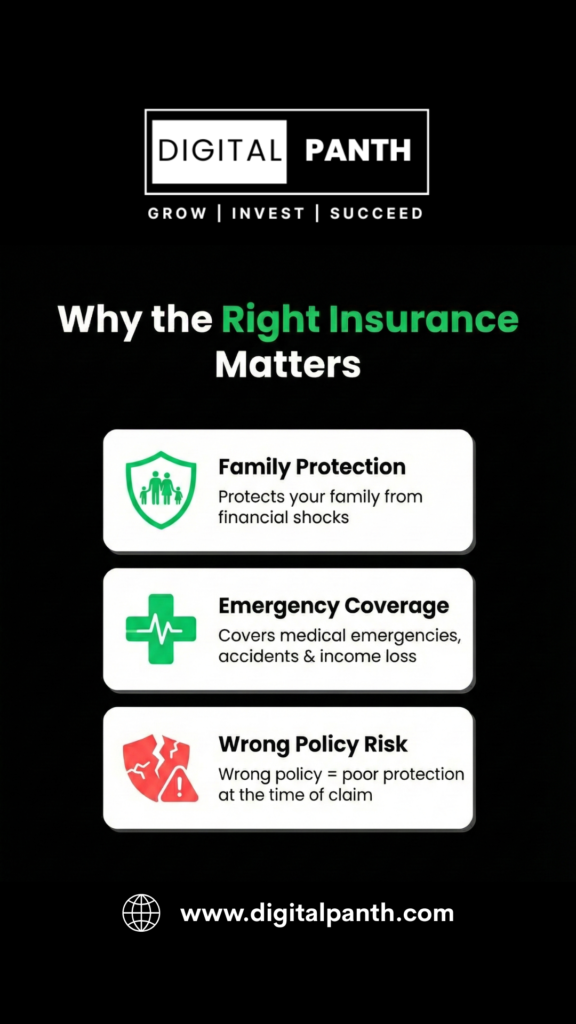
Choosing the right insurance for policy matters is important because we buy insurance to protect our families from financial catastrophes. Medical emergencies, accidents, and death of an income-producing family member can significantly affect the value of our long-term financial future if we do not have sufficient insurance.
When selecting a policy, if you are unaware of your coverage and the exclusions on your policy, you may be purchasing the wrong insurance policy altogether, thereby negating the purpose of buying insurance in the first place. Picking the right insurance policy is just as critical as having insurance in the first place.
Step 1: Assess Your Needs to Choose the Right Insurance Policy
The first step is to identify the type of risk that needs coverage. Insurance requirements vary depending on factors such as age, income, dependents, and financial responsibilities.
Common insurance categories include:
- Health insurance for hospitalisation and medical expenses
- Term life insurance to financially protect dependents
- Motor insurance for vehicle damage and third-party liability
- Travel insurance for international or frequent travellers
- Home insurance for property and asset protection
Purchasing insurance without understanding the underlying need often leads to underinsurance or unnecessary coverage.
Step 2: Look Beyond Online Comparison Rankings
Digital comparison platforms help understand premium ranges and basic features. However, rankings based solely on price can be misleading. Instead of focusing only on the lowest premium, policyholders should evaluate:
- Coverage scope
- Exclusions and limitations
- Claim settlement record of the insurer
- Ease of claim process
A slightly higher premium may be justified if it ensures smoother claim settlement and better coverage.
Step 3: Read Policy Terms and Exclusions to Choose the Right Insurance Policy
Policy wording defines the actual coverage. Important aspects to review include:
- Waiting periods (especially in health insurance)
- Exclusions, both permanent and time-bound
- Sub-limits on room rent, treatments, or repairs
- Co-payment clauses, if any
Digital access to policy documents makes it easier for buyers to review terms in advance. Skipping this step often leads to disputes during claim settlement.
Step 4: Evaluate the Insurer’s Claim Settlement Performance
Claim settlement is the true test of any insurance policy. Before purchasing, it is advisable to check:
- Claim settlement ratio over recent years
- Average turnaround time for claims
- Consumer grievance records
- IRDAI registration and compliance status
Insurers with consistent claim settlement performance are generally more reliable during emergencies.
Step 5: Decide the Right Coverage Amount to Choose the Right Insurance Policy
Choosing coverage based only on affordability can be risky. Coverage should reflect real-life costs.
For example:
- Health insurance coverage should account for rising medical inflation
- Term insurance cover should ideally be 10–15 times annual income
- Motor insurance should include both third-party and own-damage protection
- Underinsurance can result in significant out-of-pocket expenses at the time of a claim.
Step 6: Be Selective with Policy Add-Ons
Digital platforms often offer multiple add-ons during checkout. While some add-ons enhance coverage, others may not provide meaningful value. Add-ons should be selected only when they:
- Address specific risks
- Complement the base policy
- Offer long-term utility
Unnecessary add-ons increase premiums without proportionate benefits.
Step 7: Make Accurate Disclosures to Choose the Right Insurance Policy
Non-disclosure or incorrect disclosure of information, such as medical history, smoking habits, or previous claims can lead to claim rejection. In the digital age, insurers rely heavily on declared information. Accuracy at the proposal stage is critical to ensure claim validity later.
Step 8: Review Insurance Coverage Periodically
Insurance needs evolve with changes in income, lifestyle, and family structure. Policies should be reviewed periodically, especially after major life events such as marriage, childbirth, or job change. Digital renewal convenience should not replace periodic policy review.
Mistakes that common policyholders Make
Common mistakes made by the typical policyholder that could have been prevented are:
- Based on advertisement and discount factor Only
- Not taking into account exclusions and wait times
- Buying less coverage to save on premiums
- Not purchasing insurance until the later stages of life
According to consumer advisories issued by the IRDAI, policyholders should carefully review policy terms and coverage details before purchasing insurance. Avoiding these mistakes allows you to take full advantage of the protection your insurance offers.
Digital Platforms in Making Insurance Decisions
Digital platforms have made it much easier for people to find and share information on insurance, as well as Giving them the ability to:
- Compare policies easily
- Complete online documentation
- Process insurance issue/renewal requests quicker
This said, the final decision is always your responsibility. Digital ease should support good decision making, not replace it!
Conclusion
Choosing the right insurance policy in the digital age requires a balance of research, understanding, and financial planning. While online tools have simplified access, they also demand greater awareness from consumers. When you choose the right insurance policy, it provides financial security, peace of mind, and long-term protection. Making a careful and informed decision today can help prevent financial distress in the future.
Frequently Asked Questions (FAQs)
Why is choosing the right insurance policy important?
Choosing the right insurance policy ensures financial protection against unexpected events such as medical emergencies, accidents, or loss of income. The wrong policy or inadequate coverage can lead to financial stress at the time of a claim.
Is buying insurance online safe in India?
Yes, buying insurance online is safe when done through IRDAI-registered insurers or trusted platforms. Digital policies offer transparency, easy access to documents, and faster processing. However, buyers should carefully review policy terms before purchasing.
How do I decide how much insurance coverage I need?
Coverage should be based on real-life costs and personal circumstances. For example, health insurance should factor in rising medical inflation, while term insurance should generally be 10–15 times your annual income.
Disclaimer: This article is intended for general informational purposes only and does not constitute financial, legal, or insurance advice. Insurance needs vary from individual to individual. Readers are advised to carefully review policy documents and consult a qualified insurance advisor or official insurer sources before purchasing any insurance policy.
