

The EWS Certificate is an official government document issued to people who belong to the General (Unreserved) category and come under the Economically Weaker Section. With this certificate, eligible candidates get 10% reservation in government jobs, colleges, and entrance exams. The EWS reservation was introduced by the Government of India to support financially weaker families who do not fall under SC, ST, or OBC categories.
What is an EWS Certificate?
The EWS Certificate, also known as Income & Asset Certificate, is issued by the government to provide 10% reservation for economically weaker candidates of the General category.You can use this certificate for:
- UPSC, SSC, Railways, Banking exams
- NEET, JEE Main, JEE Advanced, CUET
- Admission in central and state government colleges
- Government job recruitments
EWS is purely income-based, not caste-based. If you are in the General category and financially weaker, this certificate can give you a major advantage.
EWS Certificate Eligibility 2026
To get an EWS certificate, you must meet ALL the following conditions:
Income Limit
Your family’s total annual income must be less than ₹8 lakhs from:
- Salary
- Business
- Agriculture
- Rent
- Investment income
This income is checked for the previous financial year.
Property Conditions
Your family must NOT own:
- Residential Property
- Flat 1,000 sq ft or bigger, OR
- Residential plot 100 sq yards or more (in municipal area), OR
- Residential plot 200 sq yards or more (in non-municipal area)
- Agricultural Land
- 5 acres or more of farming land → Not eligible
If your family owns property above these limits, EWS certificate cannot be issued.
Category Requirement
You must belong to:
- General / Unreserved category
- If you fall under SC, ST, OBC—even if financially weak—you cannot apply.
Whose Income Is Counted?
Family includes:
- You (the applicant)
- Your spouse
- Your parents
- Your unmarried siblings below 18
Their combined income and property details will be checked.
Documents Required for EWS Certificate 2026
You will need the following documents:
- Aadhaar Card
- PAN Card
- Income certificate
- Property/land records
- Proof of residence (Aadhaar/Voter ID/Utility Bill)
- Passport-size photos
- Self-declaration affidavit (EWS Undertaking)
- Ration card (optional)
- Bank statements / salary slips (if required)
- Different states may ask for additional documents.
How to Apply for EWS Certificate (2026) — Step-by-Step Guide
You can apply online (in many states) or offline through government offices.
Offline Process (Tehsildar/SDM Office)
Visit:
- Tehsil Office / SDM Office / District Collector Office / CSC Centre
- Take the EWS Application Form (Income & Asset Certificate form).
- Fill in personal, family income, and property details.
- Attach all required documents.
- Submit the form to the authorized officer.
- Revenue department verifies:
- Income
- Land/property
- Family details
If approved, a certificate is issued within 7–21 days. This duration may vary by state.
Online Process (State e-District Portals)
Many Indian states allow online applications.
How to Apply Online:
- Go to your state’s eDistrict portal (Example: Delhi eDistrict, Maharashtra Aaple Sarkar, UP eDistrict, etc.)
- Register/login using mobile number or Aadhaar.
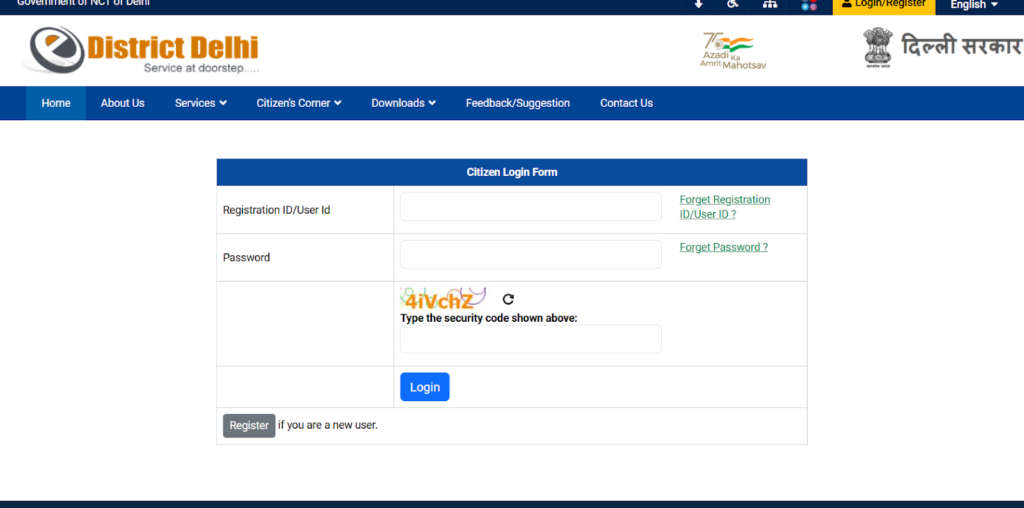
- Select “Income & Asset Certificate (EWS)” service.
- Fill the form with correct details.
- Upload scanned documents.
- Submit the application and note your reference/acknowledgment number.
- Track application status online.
- Download the EWS certificate once approved.
Online certificates are usually digitally signed and valid everywhere.
| Validity of EWS CertificateValid for one financial year, or Until 31 March 2026 (for exam/admission cycle)For competitive exams, you may need a fresh certificate every year. |
Benefits of EWS Certificate
The EWS certificate offers several strong advantages, especially for students and job seekers.
- 10% Government Jobs Reservation
The primary benefit is the eligibility for the 10% quota in jobs in the Central and State governments. This also provides the opportunity to the qualified candidates to fight with lower cut-offs and have more chances of being selected in:
- UPSC exam
- SSC exam
- Railway recruitment
- Banking recruitment
- State PSC exams
- Reservation in Government & Public Colleges
The EWS category can take advantage of 10% reserved seats in the following institutes for higher education:
- IITs, NITs
- AIIMS and other medical colleges
- All central universities (DU, BHU, JNU, etc.)
This makes access to admission even in very competitive disciplines.
- Entrance Exam Cut-Offs for EWS Lowered
The major tests like NEET, JEE Main/Advanced, CUET, CLAT have different cut-offs for EWS candidates which are generally lower than the general category. It increases the likelihood of qualifying and getting a good seat.
- Increased Possibilities in Counseling & Seat Allotment
During the college admissions counseling, EWS candidates are given the opportunity to participate under the separate quota.
It means more seats available and less competitiveness for the reserved category compared to the unreserved one.
- State-specific Benefits Access
States like Karnataka or Andhra Pradesh etc. offer more support to EWS certificate owners like:
- Reduced fees
- State grants
- Priority in the housing schemes
- Support in state recruitment/welfare programs
Benefits may differ from state to state but they can be a great help for low-income families.
- Financial Burden Removal
The certificate acts as a guarantee that the economically weak from the General category get the same support as the other reserved categories.
This leads to the provision of equal opportunities in education and government jobs.
- Useful for Renewals, Admissions & Document Verification
Educational institutions as well as government agencies frequently request proof of income/assets. The EWS certificate proves your economic status officially and is recognized all over India.
- Encourages Equal Opportunity & Inclusion
The EWS quota is a corrective measure that not only ensures that financial disadvantages , irrespective of caste, are noticed but also that they are considered in the selection process. It allows people to be considered on the basis of their financial need, not their social group.
Who Issues the EWS Certificate?
Authorized officers include:
- Tehsildar
- Sub-Divisional Magistrate (SDM)
- District Magistrate (DM)
- Additional District Magistrate (ADM)
Certificates issued by anyone else are not valid for exams.
Conclusion
The EWS certificate offers a great chance to the economically weaker section of general category people; it provides 10% reservation in government jobs, higher education, and major entrance exams. If you fulfill the income and property requirements, getting an EWS certificate can significantly increase your chances of getting access to better educational and professional opportunities.
Frequently Asked Questions
Anyone belonging to the General/Unreserved category whose family income is below ₹8 lakh per year and who meets the property criteria can apply. SC/ST/OBC candidates cannot apply for EWS.
Your family’s total income must be less than ₹8 lakh in the previous financial year, including salary, agriculture, business, and other earnings.
The EWS Certificate is usually valid for one financial year. Many exams require a fresh certificate every year, especially NEET, JEE, and UPSC.
Disclaimer: The information provided in this article is for general awareness and educational purposes only. Eligibility rules, required documents, and application procedures for the EWS Certificate may vary from state to state and may change over time. Candidates should always verify the latest guidelines from their state government portal, district authorities, or official exam notifications before applying.
